
Posts

Property Management & CAMS: What Every Real Estate Student Needs to Know to Pass the PSI Exam in 2026.

PROPERTY MANAGER MEETING with vendors and maintenance team

PROPERTY MANAGER MEETING with vendors and maintenance team

🏢 Property Management & the CAM Role: Your Complete PSI Exam Guide

By Capital Real Estate School | PSI Exam Prep Series — Topic 10

If you’re studying for your real estate salesperson license exam, property management is one of those topics you absolutely need to nail down. The PSI exam will test you on the real-world duties of a property manager — from signing a management agreement to keeping tenant money safe in a trust account. About 3% of your licensing exam questions will relate to property management, so every point in this outline counts.

Let’s explain it clearly so you can enter that testing center with confidence. 🎯

What Is a Property Manager?

A property manager is a licensed real estate professional who takes care of a property on behalf of the owner. Think of it like this: the owner is the boss, and the property manager is the trusted employee hired to keep things running smoothly.

The primary goal of a property manager is simple — produce the greatest net return for the property owner while always acting in that owner’s best financial interest. That means collecting rent on time, keeping the building in good shape, finding great tenants, and making sure all the bills get paid.

A property manager can also be referred to as a Community Association Manager (CAM) — especially when managing homeowners associations (HOAs) or condominium communities. The CAM role involves the same core responsibilities but within a shared-ownership community structure.

  1. The Management Agreement: Your Authority Document

Before a property manager can do anything, there must be a written property management agreement. This is a legal contract between the owner and the manager: and it defines everything.

What’s in a Management Agreement?

Here are the key items the PSI exam expects you to know:

  • Property description: Identifies the specific property being managed
  • Term of the agreement: Start date, end date, and how it can be terminated
  • Owner’s purpose: What does the owner want the manager to accomplish?
  • Scope of authority: What decisions can the manager make without asking the owner?
  • Reporting requirements: How often and in what format will the manager report to the owner?
  • Compensation: Management fee calculation (often a percentage of collected rent)
  • Antitrust provision: Fees are always negotiable (no price-fixing)
  • Equal opportunity statement: All activity must comply with Fair Housing laws.

📌 PSI Exam Tip: The management agreement creates an agency relationship between the property manager (agent) and the property owner (principal). The manager owes the owner fiduciary duties, not the tenant.

  1. Fiduciary Duties to the Owner

This is a big one on the PSI exam. As a property manager, you are a fiduciary to the owner. That means you have a legal and ethical duty to act in the owner’s best interest, period.

The six fiduciary duties you must know, often remembered with the acronym OLD CAR or COLD/AC, are:

DutyWhat It Means
ObedienceFollow the owner’s lawful instructions
LoyaltyPut the owner’s interests above your own
DisclosureShare all material facts with the owner
ConfidentialityProtect information that could weaken the owner’s position
AccountingAccount for all money and property belonging to the owner
Reasonable CareAct with the skill and diligence of a competent professional


A property manager must disclose all rental offers received, along with any supporting documentation, so the owner can make informed decisions about potential tenants. The manager cannot act against the owner’s interests, even in small matters.

Importantly, property managers owe fiduciary duties to the owner, but they do have separate (non-fiduciary) legal obligations to treat tenants fairly under Fair Housing laws.

If an exam question asks to whom the property manager’s fiduciary duty goes, the answer is the owner (principal), not the tenant.

  1. Setting Rents, Budgets, and Operating Statements

One of the manager’s most important jobs is figuring out how much rent to charge. Charge too little and the owner loses money; charge too much, and the property sits empty.

A good property manager will:

  • Research the rental market: Compare similar properties in the area
  • Set competitive rental rates: Based on location, amenities, and market data
  • Prepare an operating budget: Estimate income and all expected expenses for the year
  • Produce cash flow reports: Show how much money is coming in versus going out
  • Deliver budget comparison reports: Compare actual performance against the budget.

Sample Monthly Operating Statement

Income/Expense CategoryAmount
Gross Rental Income$12,000
Vacancy Loss (5%)−$600
Effective Gross Income$11,400
Management Fee (8%)−$912
Maintenance & Repairs−$800
Insurance−$300
Property Taxes−$500
Net Operating Income (NOI)$8,888


Understanding how to read and prepare a basic operating statement like this is an essential skill for property management, and the PSI exam may test you on it.

📌 PSI Exam Tip: Know the difference between Gross Rental Income (all possible rent if 100% occupied) and Effective Gross Income (after vacancy and collection losses). NOI is always before mortgage payments.

  1. Tenant Screening and Lease Administration

Finding the right tenant is one of the most important things a property manager does. But you must carry out this process carefully and legally.

How to Screen Tenants Properly

A standard rental application and screening process includes the following reviews:

  • Income stability: Tenant typically needs income 2.5–3× the monthly rent
  • Credit history: Payment patterns and outstanding debts
  • Employment verification: Current employer and job stability
  • Rental history: References from previous landlords
  • Background check: Reviewed carefully under Fair Housing guidelines

All applicants must go through the same consistent process. You cannot ask about or make decisions based on race, color, religion, sex, national origin, disability, or familial status, these are the protected classes under the Fair Housing Act.

HUD guidance also cautions managers against overbroad use of criminal records, eviction records, or credit history in ways that could create a discriminatory effect.

📌 PSI Exam Tip: Using different screening criteria for different applicants is a Fair Housing violation. Always apply the same written standards to everyone.

Once a tenant is selected, the property manager handles lease administration, getting the lease signed, collecting the security deposit, completing move-in inspections, collecting monthly rent, and handling renewals or non-renewals.

  1. Maintenance and Risk Management

Keeping the property in good condition is a core responsibility. The PSI exam breaks maintenance down into three types:

Maintenance TypeDescriptionExample
PreventiveDone on a schedule to stop problems before they startAnnual HVAC servicing, roof inspections
CorrectiveRepairs made after something breaksFixing a broken water heater
RoutineRegular upkeep to keep the property clean and functionalLawn care, snow removal, and cleaning common areas


Beyond these three, capital improvements are major upgrades that increase the property’s value or extend its useful life, like replacing a roof, installing new windows, or upgrading an elevator. Capital improvements are typically budgeted separately from regular operating expenses.

Risk Management: Insurance & Safety

A property manager is also responsible for making sure the property is properly insured and safe. Key insurance types to know for the PSI exam include:

  • Property insurance: Covers the building against damage from fire, storms, etc.
  • Liability insurance: Protects against lawsuits from injuries on the property
  • Loss of rents insurance: Covers lost income if the property becomes uninhabitable
  • Workers’ compensation: Covers maintenance staff injuries on the job

📌 PSI Exam Tip: Risk management is about reducing and transferring risk. Insurance transfers financial risk; proper maintenance reduces the likelihood of accidents

  1. Trust Accounts: Keeping Money Safe and Separate

This is one of the most tested topics on the PSI exam related to property management. Pay close attention. 🚨

When a property manager collects rent or security deposits from tenants, that money does not belong to the property manager; it belongs to the tenant (deposit) or the owner (rent). It must be held in a trust account, completely separate from the manager’s own business funds.

The Two Big Violations to Know

Commingling: Mixing client funds (rent or deposits) with the property manager’s personal or business funds. This is illegal and can result in loss of license.

Conversion: Using one client’s funds to pay for another client’s property expenses. Also, illegal.

Trust Account Best Practices

  • Keep a dedicated trust account with “Trust,” “Escrow,” or “Client Benefit” in the account name
  • Security deposits and rents may need to be kept in separate accounts (varies by state)
  • Perform a three-way reconciliation monthly: bank balance + checkbook balance + sum of all client ledgers
  • Keep records (leases, deposit slips, owner reports, invoices) for 4–6 years
  • Require dual approval for large disbursements

In Connecticut, Connecticut General Statutes § 47a-21 requires security deposits to be treated as trust funds — the money continues to belong to the tenant and must be held in a separate escrow account at a Connecticut-based financial institution and must never be commingled with the landlord’s personal or business funds.

📌 PSI Exam Tip: The key rule is “separate, separate, separate.” Client money is never your money. Any mixing = commingling = license in jeopardy.

  1. Recordkeeping, Owner Reports, and Compliance

A property manager’s job doesn’t end when the rent check clears. You also have a duty to keep detailed records and report to the owner regularly.

Reports a Property Manager Must Provide

  • Operating budget: Annual projection of income and expenses
  • Cash flow reports: Monthly income vs. expenses
  • Profit and loss statements: Overall financial performance
  • Budget comparison reports: Planned vs. actual spending

State law often dictates the minimum reporting requirements — including how often reports must be delivered and what information they must contain.

Legal Compliance

Property managers must stay current with:

  • Fair Housing Act: No discrimination in renting, advertising, or screening
  • Americans with Disabilities Act (ADA): Reasonable accommodations must be provided
  • State landlord-tenant laws: Including security deposit limits and timelines
  • Local building codes: Health and safety standards for rental units

🧠 Quick PSI Exam Study Tips for Property Management

Here’s a rapid-fire review of the most commonly tested points in this section:

  1. The primary goal of a property manager = greatest net return for the owner
  2. Management agreement = creates the agency relationship + defines the scope of authority
  3. Fiduciary duties = OLD CAR (Obedience, Loyalty, Disclosure, Confidentiality, Accounting, Reasonable Care)
  4. Fair Housing = same screening criteria for ALL applicants, no exceptions.
  5. Trust accounts = client money is NEVER the manager’s money
  6. Commingling = illegal mixing of funds; Conversion = using one owner’s money for another
  7. NOI = Effective Gross Income minus Operating Expenses (before debt service).
  8. Capital improvements = major upgrades (not routine maintenance) that add long-term value.
  9. Three-way reconciliation = must be done monthly to verify trust account balances
  10. License required — in most states, including New York, a broker’s license is needed to manage property for others.

📚 Additional Study Resources

Here are 8 external resources to strengthen your understanding of these PSI exam points:

  1. 🔗 PSI Exam Prep: Leasing & Property Management (Video): Great walkthrough of exam questions
  2. 🔗 National Real Estate Exam Prep: Property Management & Leasing: Covers lease types and PM duties
  3. 🔗 5 Key Insights on Fiduciary Duty for Property Managers: Fiduciary duty deep dive
  4. 🔗 DoorLoop: Property Management Trust Accounting Guide: Full trust account rules
  5. 🔗 How to Comply with the Fair Housing Act for Tenant Screening: Fair Housing and Screening
  6. 🔗 NYC Security Deposit Laws: Landlord Duties & Commingling: State-specific deposit rules
  7. 🔗 Tenant Screening Best Practices for Property Managers: Comprehensive screening guide
  8. 🔗 Justia: Rental Property Management & Legal Considerations: Legal overview for landlords and managers

📝 Chapter Review: Key Terms to Know

TermDefinition
Property Management AgreementWritten contract defining the manager’s authority, duties, and compensation
Fiduciary DutyLegal obligation to act in the owner’s best interest with loyalty and full disclosure
NOI (Net Operating Income)Effective Gross Income minus operating expenses; before mortgage payments
ComminglingIllegally mixing client funds with the manager’s own funds
ConversionUsing one client’s funds to pay another client’s expenses, also illegal
Trust AccountDedicated bank account where client rent and deposit funds are held separately
Preventive MaintenanceScheduled upkeep to prevent problems before they occur
Capital ImprovementMajor upgrade that increases property value or extends useful life
CAMCommunity Association Manager, manages HOAs and condo communities
Three-Way ReconciliationMonthly matching of bank balance, checkbook balance, and client ledgers


Property management may only be a small percentage of your PSI exam, but a solid understanding of these concepts will not only help you pass, it will make you a much more well-rounded real estate professional. Master the management agreement, respect your fiduciary duties, keep tenant funds properly separated, and stay compliant with Fair Housing laws, and you’ll be ready for any property management question the exam throws your way. 🏆

Next Up in the PSI Exam Prep Series, Stay tuned for more topic breakdowns to help you pass on your first try!

This article is part of our CRES Real Estate License Exam Prep Series. For more PSI outline topics, visit our course library


Practice of Real Estate: What Every Real Estate Student Needs to Know to Pass the PSI Exam in 2026

Practices In Real Estate - Fair Housing Protected Classes & Familial Status Laws.

Practices In Real Estate – Fair Housing Protected Classes & Familial Status Laws.

Practice of Real Estate: What Every Future Salesperson Should Know for the PSI Exam

The practice of real estate is where the law meets real life. It covers how a real estate licensee should act, how money must be handled, how offers move through a transaction, and how professionals stay fair, legal, and careful in every deal. For the PSI real estate salesperson exam, this topic matters because many questions test day-to-day brokerage behavior, not just definitions, which means students need both the rule and the reason behind it.

A strong way to study this section is to think like a working agent. On the exam, the questions often ask what a licensee should do next, what action to prohibit, or which rule the licensee has violated. That is why this post breaks the PSI outline into plain-language sections, adds exam tips, and points to outside resources you can use for extra review.

Why this topic matters

Real estate is a service business built on trust. Buyers and sellers rely on licensees to handle money properly, present offers promptly, protect confidential information, and avoid unfair or illegal conduct. The PSI exam reflects that reality by asking about common brokerage situations, such as escrow mistakes, handling multiple offers, fair housing violations, and antitrust issues.

Students sometimes miss these questions because the answer choices look similar. The best answer usually follows three ideas: protect the public, obey the law, and stay within the licensee’s role. If one answer involves hiding information, delaying an offer, mixing trust funds, or giving legal advice, that answer is usually wrong.

PSI outline subtopics at a glance

The PSI outline for the Practice of Real Estate focuses on the core behaviors expected of licensees in the field. These subtopics are the main points to know before exam day.

PSI subtopicWhat to know for the test
Duties and responsibilities of licenseesAdvertising rules, escrow handling, commingling, and conversion are common test points.
Offers and counteroffersKnow how to present prompts, how counters work, and how to handle multiple offers.
Confidentiality, honesty, and fair dealingLicensees owe honesty to all parties and confidentiality to clients.
Fair housingKnow the seven federally protected classes and illegal acts, such as steering and blockbusting.
ADA basicsReal estate offices that serve the public must follow basic accessibility rules as public accommodations.
AntitrustBe ready to identify price-fixing, group boycotts, market allocation, and tie-in arrangements.
Risk managementE&O insurance helps cover claims arising from negligence and professional errors.
Unlicensed practice of lawAgents may use standard forms, but they may not give legal advice or draft custom legal language beyond their authority.


Duties and responsibilities of licensees

A real estate license is not just permission to sell houses. It is a legal duty to act with care, competence, and honesty while following brokerage and state rules. Licensees must disclose material facts when required, obey lawful instructions from clients, account for money and documents, and avoid misleading acts in advertising and negotiation.

Advertising is a major exam area because it is easy to test. Ads must be truthful, not misleading, and usually must identify the brokerage in a way that the public can understand. A hidden or “blind” ad is a warning sign on exam questions because the public has a right to know that a real estate professional is behind the message.

Another major duty is the proper handling of trust or escrow funds. When a buyer gives earnest money, that money does not become the broker’s or the seller’s money right away; it must be held and handled in accordance with the law and the agreement. This is where many students must clearly separate commingling from conversion.

Escrow mistakeMeaningWhy it matters on the PSI exam
ComminglingMixing client funds with personal or business funds.It is illegal even if the broker does not spend the money.
ConversionUsing client funds without authority for personal or business purposes.It is more serious because it involves unauthorized use or theft.
Proper escrow handlingKeeping trust funds in the correct account and following the rules for deposits and disbursements.This is often the “best answer” when an exam question asks what the broker should do.

PSI exam tips for escrow questions

  • If the facts say money was mixed with office funds, think commingling.
  • If the facts say money was spent, borrowed, or used, think conversion
  • If an answer choice says to place trust money in a separate escrow or trust account, that is often the correct direction.
  • If the scenario sounds casual, remember the exam still expects strict handling of client money.

Offers, counteroffers, and multiple-offer situations

Real estate agents do more than market property. They also move communication between the parties, especially offers and counteroffers. A key rule is that offers should be presented in a timely manner, because delay can harm a client and may violate the licensee’s duty.

A counteroffer does not accept the first offer as written. Instead, it rejects the original offer and proposes new terms, meaning the first offer is no longer open unless renewed. This is a common exam trap because students sometimes treat a counteroffer like a partial acceptance when it is really a new offer.

Multiple-offer situations also often appear on exams because they test ethics and procedure simultaneously. A listing agent should present all offers to the seller as quickly as possible unless the seller has given written instructions to the contrary. The seller decides which offer to accept, reject, or counter, and the agent should not secretly hide an offer just because another one looks better.

PSI exam tips for offer questions

  • Present all offers promptly unless lawful written instructions say otherwise.
  • A counteroffer ends the original offer and creates a new one.
  • The listing agent works for the seller but still owes honesty and fair dealing to buyers.
  • In a multiple-offer question, focus on timely presentation and full disclosure to the client, not favoritism.

Confidentiality, honesty, and fair dealing

One of the most important differences on the exam is the difference between duties owed to a client and duties owed to all parties. Confidentiality is a client-level duty, meaning private information obtained through the agency relationship should be protected. Honesty and fair dealing apply more broadly, so a licensee must not lie, hide material facts when disclosure is required, or mislead the other side.

For example, an agent should not tell a buyer that the seller is desperate unless the seller has allowed that disclosure. That information could weaken the seller’s bargaining position and break confidentiality. At the same time, the agent cannot lie about a known material defect or make false statements about the property to push a sale forward.

This area also ties into risk management. Many complaints and lawsuits stem from poor communication, careless statements, and failure to document what was said and when. On the PSI exam, the safer answer is usually the one that protects confidential facts, tells the truth, and avoids promises the licensee cannot support.

Fair housing and discriminatory practices

Fair housing is one of the highest-value topics in practice questions because it connects law, ethics, and day-to-day behavior. The federal Fair Housing Act prohibits discrimination in housing because of race, color, national origin, religion, sex, familial status, and disability. Students should know these seven classes in their exact form for the exam.

The exam also tests illegal conduct tied to those protected classes. Steering means guiding buyers or renters toward or away from certain neighborhoods based on a protected trait. Blockbusting means trying to scare owners into selling by suggesting that people from a protected class are moving into the neighborhood. Redlining means refusing loans, insurance, or services in certain neighborhoods because of the people who live there or are expected to live there.

Discriminatory advertising is another key point. Real estate ads should describe the property, not the type of person the advertiser prefers. Phrases that show preference or limitation based on a protected class can create fair housing problems, even when the advertiser claims there was no harmful intent.

Protected classes and prohibited practices

Fair housing pointTest-ready meaning
Protected classesRace, color, national origin, religion, sex, familial status, and disability.
SteeringDirecting people to or away from areas because of protected status.
BlockbustingEncouraging owners to sell by creating fear about neighborhood change tied to a protected class.
RedliningDenying lending, insurance, or service access based on neighborhood demographics.
Discriminatory advertisingAds that show preference, limitation, or discrimination tied to protected status.


PSI exam tips for fair housing questions

  • If the action treats people differently because of a protected class, it is likely illegal under federal fair housing rules.
  • If the ad describes the ideal buyer instead of the property, watch for discrimination.
  • If an agent says, “You would feel more comfortable in that area,” think steering.
  • Memorize all seven protected classes in one group, not as separate facts.

ADA basics for public accommodations

The Americans with Disabilities Act is not the same as the Fair Housing Act, and the exam may test the difference between them. The ADA primarily covers public accommodations and other commercial spaces open to the public, including real estate offices. That means the office should provide basic access and reasonable accommodation for people using its services.

The Fair Housing Act, by contrast, focuses on housing-related discrimination and disability protections in residential settings. A good exam habit is to link the ADA to public-facing business access and the Fair Housing Act to housing discrimination rules.

Antitrust laws in real estate

Antitrust law protects competition. In real estate, these laws help prevent brokers or firms from colluding in ways that harm consumers or impede fair competition. The exam usually focuses on four classic violations: price-fixing, group boycotts, market allocation, and tie-in arrangements.

Price-fixing occurs when competitors agree on commission rates or fees rather than competing independently. Group boycott means competitors agree not to do business with a certain person or company. Market allocation means competitors divide territory, customers, or business types among themselves. A tie-in arrangement occurs when one product or service is required as a condition of obtaining another service.

PSI exam tips for antitrust questions

  • If brokers “agree” on rates, fees, or territory, think antitrust violation.
  • Independent business decisions are usually legal; agreements among competitors are the danger point.
  • The test may use plain language instead of legal terms, so match the facts to the concept.

Risk management and E&O insurance

Risk management means reducing the chance of complaints, lawsuits, and costly mistakes before they happen. One important tool is errors and omissions insurance, often called E&O insurance, which is a form of professional liability coverage for claims arising from negligent acts, mistakes, or inadequate professional services. NAR explains that E&O coverage can help pay legal defense costs and settlements up to policy limits when claims arise from licensed real estate activities.

E&O insurance does not excuse careless conduct. In fact, some of the most common risk areas involve things licensees can control, such as missed disclosures, inaccurate property descriptions, poor recordkeeping, and giving advice outside the scope of the license. Strong office training, written procedures, and careful documentation reduce those risks.[7][5]

A simple way to remember this topic is with the chart below.

flowchart TD
A [real estate activity] –> B{Was the conduct within licensed activities?}
B –>|Yes| C [E&O coverage may help with defense costs and claims]
B –>|No| D [Coverage may not apply]
D –> E [Examples: acting like a lawyer or inspector]
C –> F [Still use disclosure, documentation, and office policies to lower risk.]

The exam may not ask in-depth insurance questions, but it may ask why E&O matters or which activity poses a risk. If the choice involves misrepresentation, missing disclosure forms, or going beyond licensed duties, it points toward a risk management problem.

Unlicensed practice of law vs. allowed licensee activity

Real estate agents work with contracts, but they are not attorneys unless they are separately licensed as attorneys. This is why the line between normal licensee activity and the unauthorized practice of law matters so much. In general, a licensee may use approved standard forms, fill in factual blanks, and explain business terms in a routine transaction.

Problems begin when a licensee starts drafting custom legal language, interpreting legal rights, advising on lawsuits, or handling complex title and legal disputes without an attorney. NAR also warns that E&O protection may not help when an agent steps outside licensed real estate activities and starts “acting like a lawyer.”

PSI exam tips for UPL questions

  • Using standard forms is usually allowed if the agent stays within brokerage practice and state rules.
  • Giving legal advice is not allowed.
  • If the issue turns on legal rights, title defects, or special contract drafting, the best answer is often to refer the client to an attorney.

How to study this PSI section effectively

This unit becomes easier when studied through scenarios, not just by memorization. Many questions are really asking, “What should the licensee do in this situation?” or “Which rule did the licensee break?” That is why it helps to sort questions into categories such as money handling, discrimination, document handling, confidentiality, and competition issues.

Try using these review steps:

  1. Memorize the seven federal protected classes as one group.
  2. Drill commingling versus conversion until the difference is automatic.
  3. Practice identifying whether a statement is a fair housing issue, an antitrust issue, or a confidentiality issue.
  4. For every contract or dispute question, ask whether the agent is crossing into legal advice.
  5. For every offer question, ask what must be presented, to whom, and how quickly.

Helpful outside reading

These sources are useful for extra review of the same topics tested in the PSI outline:

Final exam reminders for the practice of Real Estate

This PSI topic rewards students who think like careful professionals. The strongest answer usually protects the client, protects the public, obeys the law, and stays within the limits of a real estate license. When in doubt, separate trust money, present offers promptly, protect confidential facts, avoid discrimination, do not cooperate in antitrust conduct, and refer legal questions to an attorney.

That approach is not only a good test strategy. It is also how strong real estate careers are built in the real world, and again, you’ve got this!

This article is part of our CRES Real Estate License Exam Prep Series. For more PSI outline topics, visit our course library
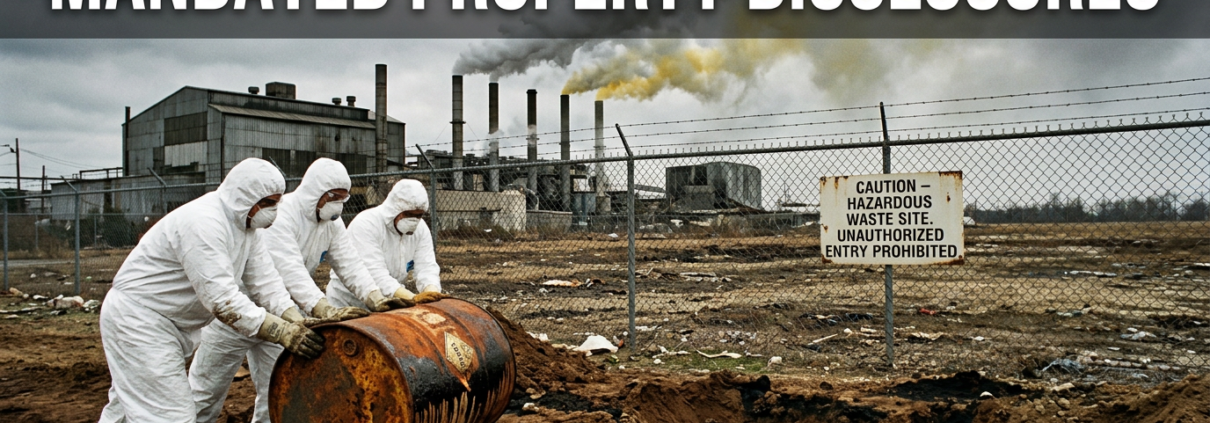
Mandated Property Disclosures: What Every Real Estate Student Needs to Know to Pass the PSI Exam in 2026

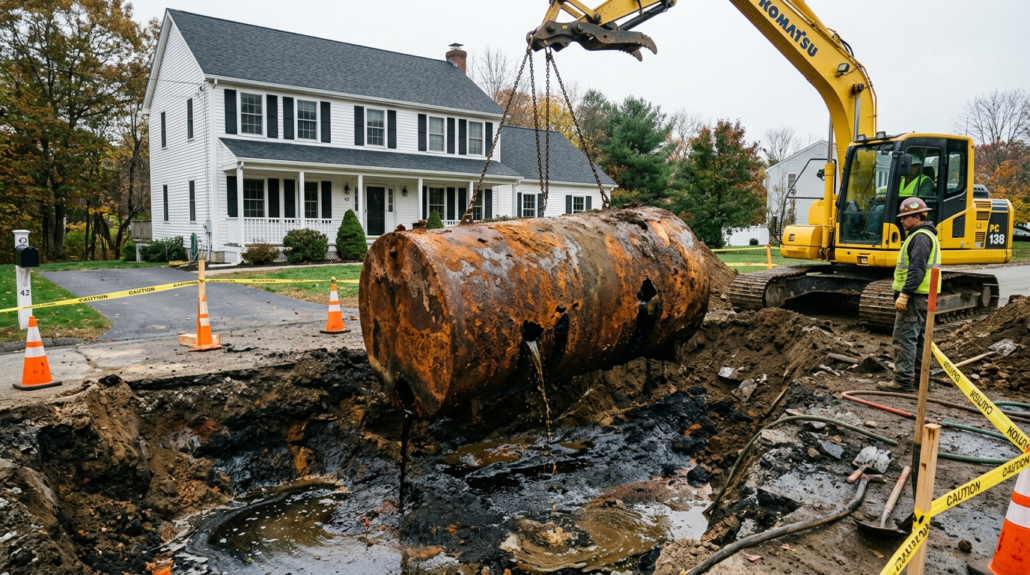
Mandated PROPERTY DISCLOSURES: oil tank removal

Mandated PROPERTY DISCLOSURES: oil tank removal

🏠 Mandated Disclosures: What Every Real Estate Salesperson Needs to Know for the PSI Exam

A study guide for real estate license candidates, built around the PSI Exam Outline

If you’re getting ready to take the PSI Real Estate Salesperson License Exam, there’s a topic that always shows up: Mandated Disclosures. This section covers Mandated (Property) Disclosures: specifically, what sellers and agents must legally tell buyers about a property’s condition and environmental hazards. On the PSI national exam, Property Disclosures make up approximately 6–7% of your total score, which means you could see anywhere from 4 to 7 questions on this topic alone. That’s not a section you want to skip.

The favorable news? Once you understand the logic behind disclosure laws, you’ll see that protecting the buyer, being honest, and not hiding problems make a lot of sense. Let’s walk through each subtopic in the PSI outline and make sure you’re exam-ready.

📋 Part 1: Property Condition & Defect Disclosure

What Does “Disclose” Actually Mean?

At its most basic level, a disclosure is simply telling the truth about what you know. In real estate, sellers and their agents are required by law to disclose any known problems with a property that could affect its value, safety, or desirability.

Most states require sellers to complete a Property Condition Disclosure Statement (PCDS) — a standardized written form that covers everything from the roof and foundation to plumbing, electrical systems, and environmental hazards. Both the seller and the buyer must sign and date the completed form to confirm receipt.

Here’s the key part for your exam: you only have to disclose what you actually know. Sellers are generally not required to hire inspectors or dig through public records to discover problems before disclosing them. However, if you know about a problem and hide it, that’s fraud — and it can lead to lawsuits, contract rescission, and license suspension.

💡 PSI Exam Tip: If a question asks whether a seller must investigate unknown defects before completing a disclosure, the answer is almost always NO — they must only disclose known defects. But if they actively conceal a known problem, that’s a willful violation.

Material Facts vs. Latent Defects

These are two terms the PSI exam loves to test. Here’s how to keep them straight:

  • Material fact: Any information that a reasonable buyer would consider important in deciding to buy the property or in setting the price. This is a broad category that includes physical defects, legal issues (like zoning violations), and environmental hazards.
  • Latent defect: A hidden problem that you can’t easily see during a normal walkthrough. Think of a cracked foundation hidden behind finished drywall or a leaky roof that only causes problems during heavy rain.
  • Patent defect: A defect that is visible and obvious during a normal inspection. Patent defects generally do not need to be disclosed because a buyer can see them for themselves.

Both sellers and real estate brokers have an independent legal duty to disclose material facts. Even if the seller doesn’t tell the agent about a defect, the agent can still be held liable if the agent reasonably should have known about it.

Property Disclosure Forms & “As Is” Sales

You’ll almost certainly see a question about “as is” sales on the PSI exam. Here’s the most important thing to understand:

“As is” does NOT mean “no disclosures.”

When a seller lists a property “as is,” they are saying they won’t make repairs after an inspection. But they are still legally required to disclose known latent defects to the buyer. Florida courts made this very clear in Rayner v. Wise Realty Co., where the court ruled that “as is” language cannot be used to shield a seller from disclosing known hidden defects.

Exam exceptions to know: Most disclosure laws do NOT apply to the following:

  • Foreclosure sales and sales by court order
  • Estate sales handled by a fiduciary (executor/trustee)
  • Transfers between spouses
  • New construction sold by the builder for the first time

💡 PSI Exam Tip: Watch for tricky wording. A question might state that a property is sold “as is” and then ask whether the seller must still disclose a known problem. The answer is YES — “as is” only eliminates the seller’s obligation to fix things, not to disclose them.

☣️ Part 2: Environmental Issues & Hazards

This part of the PSI outline requires disclosure of a range of environmental conditions during a real estate transaction. Some of these are regulated by federal law (like lead-based paint), others by state law, and some by both. Let’s go through them:

The Big 5 Environmental Hazards

HazardKey Disclosure RulePSI Exam Focus
Lead-Based PaintFederal law (Title X, 1992) requires disclosure for all homes built before 1978.Pre-1978 cut-off date; 10-day buyer inspection right; EPA pamphlet required
AsbestosMust disclose known presence; common in homes built before 1980Not always federally mandated for residential, but still a material fact
RadonOdorless radioactive gas from decaying uranium in soil; disclosure often required at contract signing.Colorless and odorless: buyers can’t detect it, and it must be disclosed
MoldIndicates past or present moisture/water intrusion; most states require disclosure of known mold.Often linked to water damage disclosures
Carbon Monoxide (CO)Produced by gas appliances, furnaces, and fireplaces, disclosure is tied to detector requirements.Know that CO detectors are mandated by state/local law


Lead-Based Paint: The Federal Gold Standard for Disclosure

Because lead paint is regulated by federal law, it appears on virtually every real estate licensing exam in the country. Here’s what you absolutely need to know:

  • Applies to any home built before 1978 (that’s the year the federal government banned lead paint in residential properties)
  • The law is called the Residential Lead-Based Paint Hazard Reduction Act of 1992, or Title X
  • Sellers, landlords, and their agents must:
    • Disclose any known lead-based paint and hazards
    • Provide buyers with the EPA pamphlet, “Protect Your Family from Lead in Your Home.”
    • Include a Lead Warning Statement in the contract
    • Give buyers a 10-day window to conduct a lead inspection (buyers can waive this in writing)
    • Please keep signed disclosure records for at least 7 years.

💡 PSI Exam Tip: The two numbers to memorize are 1978 (the cutoff year for lead-paint disclosure) and 10 days (the buyer’s inspection window). These are classic PSI question triggers.

Underground Storage Tanks, Groundwater, Brownfields & Wetlands

These topics often appear together on the exam and relate to a common theme: past industrial or commercial use can contaminate a property.

Underground Storage Tanks (USTs) store petroleum or hazardous chemicals, with at least 10% of the tank volume below the ground surface. The EPA recognizes leaking USTs as the leading source of groundwater contamination across the country. Property owners must disclose known USTs and properly close or remove tanks that are no longer in use.

Brownfields are abandoned or underused commercial or industrial sites that are known or suspected to be contaminated. Examples include old gas stations, dry cleaners, and manufacturing plants. The EPA’s Brownfields Program provides grants and liability protections to encourage redevelopment of these sites.

Wetlands are protected areas where land meets water, such as marshes, swamps, and bogs. Under the Clean Water Act (Section 404), filling, draining, or developing wetlands generally requires a federal permit from the Army Corps of Engineers. Unauthorized alteration of wetlands can trigger serious federal penalties.

💡 PSI Exam Tip: If a question mentions a former gas station, old dry cleaner, or industrial property being converted to residential use, think “brownfield” and “Phase I/II Environmental Assessment.”

Phase I and Phase II Environmental Site Assessments

These two assessments are the standard tools for environmental due diligence in real estate, especially for commercial transactions and any property with a history of industrial use.

Phase I ESAPhase II ESA
PurposeIdentify potential environmental concerns (called RECs: Recognized Environmental Conditions)Confirm whether contamination actually exists
MethodsNon-invasive: reviews historical records, aerial photos, regulatory databases, and site inspection.Invasive: soil sampling, groundwater testing, lab analysis.
Cost Range$1,500–$6,000$5,000–$50,000+
CERCLA ProtectionCompleting a Phase I establishes “All Appropriate Inquiries” (AAI), a prerequisite for the Innocent Landowner Defense.Confirms contamination type and extent
When RequiredMost commercial purchases are lender-required for SBA loansTriggered when Phase I finds RECs


An Environmental Impact Statement (EIS) is a broader federal document required under the National Environmental Policy Act (NEPA). It is required for major federal construction projects (highways, dams, military installations) that could significantly affect the surrounding environment. This document is different from a Phase I/II, which is property-specific due diligence.

💡 PSI Exam Tip: The PSI exam may ask what triggers a Phase II. The answer is a Phase I that identifies Recognized Environmental Conditions (RECs). Phase I doesn’t test the soil; it only reviews records and conducts a visual inspection.

⚖️ Part 3: Federal & State Environmental Laws

CERCLA — The Superfund Law

CERCLA stands for the Comprehensive Environmental Response, Compensation, and Liability Act. It was passed in 1980 after the country recognized the seriousness of contaminated site cleanup. CERCLA is sometimes called the “Superfund” law because it created a trust fund, originally built from taxes on the petroleum and chemical industries, to pay for cleanups when no other source of funds is available.

Here’s what makes CERCLA so powerful and so scary for property owners: it imposes three types of liability that are unusually harsh:

  1. Strict Liability: You can be held responsible even if you personally did nothing wrong. If you own contaminated land, you may owe cleanup costs, period.
  2. Joint and Several Liability: If multiple parties contributed to the contamination, any single party can be required to pay for the entire cleanup, not just their share.
  3. Retroactive Liability: The law applies even to contamination that happened before CERCLA was passed in 1980.

Who can be liable under CERCLA? The EPA refers to these as Potentially Responsible Parties (PRPs):

  • Current property owners and operators
  • Former owners and operators at the time hazardous waste was disposed of
  • Parties who arranged for the disposal of hazardous substances
  • Transporters who selected the contaminated site

The Innocent Landowner Defense is a way to escape CERCLA liability. To qualify, a buyer must prove they conducted All Appropriate Inquiries (AAI): essentially, a proper Phase I ESA, before purchasing the property, and genuinely had no knowledge of the contamination. This is one major reason why Phase I assessments are so important in commercial real estate transactions.

💡 PSI Exam Tip: Memorize the three characteristics of CERCLA liability: strict, joint and several, and retroactive. These are key points for the PSI test. Also know that completing a Phase I ESA is the key step in claiming the Innocent Landowner Defense.

Clean Water Act & Clean Air Act

The Clean Water Act (CWA) of 1972

The Clean Water Act’s goal is to “restore and maintain the chemical, physical, and biological integrity of the nation’s waters.” In real estate, this is especially important because:

  • The NPDES (National Pollutant Discharge Elimination System) permit program, which regulates discharges of pollutants into U.S. waterways
  • Section 404, which gives the EPA and the Army Corps of Engineers authority to regulate filling and developing wetlands
  • Properties near regulated water bodies or wetlands can face significant development restrictions that affect their value and usability

The Clean Air Act (CAA) of 1970 (originally 1963)

The Clean Air Act regulates both stationary sources (factories, power plants) and mobile sources (vehicles) of air pollution. Key points for the exam:

  • The EPA sets National Ambient Air Quality Standards (NAAQS) for six “criteria pollutants”: carbon monoxide, lead, nitrogen dioxide, ozone, particulate matter, and sulfur dioxide.
  • Each state must develop a State Implementation Plan (SIP) to explain how it will meet those federal standards
  • Properties near industrial facilities, highways, or in “non-attainment areas” (where air quality doesn’t meet federal standards) may require additional environmental review before development

💡 PSI Exam Tip: The Clean Water Act protects water; the Clean Air Act protects air. The CWA is most relevant for wetlands questions; the CAA is most relevant for industrial or commercial development near population centers. Both laws grant federal agencies authority to regulate activities that affect property use and development.

🔗 Key External Resources & Further Reading

Here are 8 essential links to help you deepen your understanding of each subtopic in the PSI outline:

  1. 🔗 EPA: Lead-Based Paint Disclosure Rule (Title X): The official federal rule, including what sellers, landlords, and agents must do.
  2. 🔗 EPA: Superfund/CERCLA Overview: Plain-English overview of how CERCLA works and who is responsible for cleanup.
  3. 🔗 EPA: Third-Party Defenses / Innocent Landowners: The three types of innocent landowner protection under CERCLA.
  4. 🔗 EPA: Assessing Brownfield Sites (Phase I/II): How Phase I and II assessments work on brownfield properties.
  5. 🔗 DNREC: Real Estate Professionals and Wetlands: What real estate agents need to know about wetland regulation.
  6. 🔗 GEO Forward: CERCLA Innocent Landowner Defense Explained: Detailed breakdown of how to qualify for the Innocent Landowner Defense.
  7. 🔗 Pacific Legal Foundation: What Is the Clean Water Act?: A readable overview of CWA and its impact on property rights.
  8. 🔗 US Realty Training: How to Pass the PSI Real Estate Exam: Expert tips and study strategies specifically for PSI exam candidates.

📝 Master Cheat Sheet: PSI Exam Quick Reference

TopicKey Rule / Number to RememberPSI Trap to Avoid
Material FactAny fact a reasonable buyer would want to knowDon’t confuse with patent (visible) defects
Latent DefectHidden; must be disclosed if known“As is” does NOT eliminate this duty
“As Is” SaleThe seller won’t repair, but STILL must disclose known defects“As is” ≠ no disclosures
Lead-Based PaintPre-1978 homes; 10-day buyer inspection window; EPA pamphlet requiredBoth sellers AND agents must comply
CERCLA LiabilityStrict + Joint & Several + RetroactiveAny one party can owe the full cleanup cost
Innocent Landowner DefenseMust complete Phase I ESA (AAI) before purchaseNo Phase I = no protection
Phase I ESANon-invasive; identifies RECs; does NOT test soilPhase I only reviews records and site visits.
Phase II ESATriggered by Phase I REC findings, soil/water samplingPhase II confirms contamination
BrownfieldsFormer commercial/industrial sites with known or suspected contaminationEligible for EPA grants and liability protection
WetlandsSection 404 of the Clean Water Act; Army Corps of Engineers permit required to fill/developUnpermitted filling = federal enforcement
Clean Water ActProtects the nation’s waterways and wetlandsKey to wetlands development questions
Clean Air ActSets NAAQS for 6 criteria pollutants; states must adopt SIPsKey for industrial site and development questions


Final Exam Reminders 💪

Before you walk into that testing center, burn these five facts into your memory:

  1. Sellers disclose what they KNOW: not what they haven’t discovered
  2. “As is” means no repairs, NOT no disclosures: that trap is on almost every exam
  3. Lead paint cut-off = 1978; buyer inspection window = 10 days
  4. CERCLA = strict, joint/several, and retroactive liability: three words, tons of points
  5. Phase I protects you under CERCLA: it’s the key to the Innocent Landowner Defense

Disclosure law exists for one reason: to protect buyers from being misled about what they’re purchasing. When you understand that core purpose, the rules stop feeling like memorization and start feeling like common sense. Good luck on your PSI exam — you’ve got this! 🎓

This article is part of our CRES Real Estate License Exam Prep Series. For more PSI outline topics, visit our course library